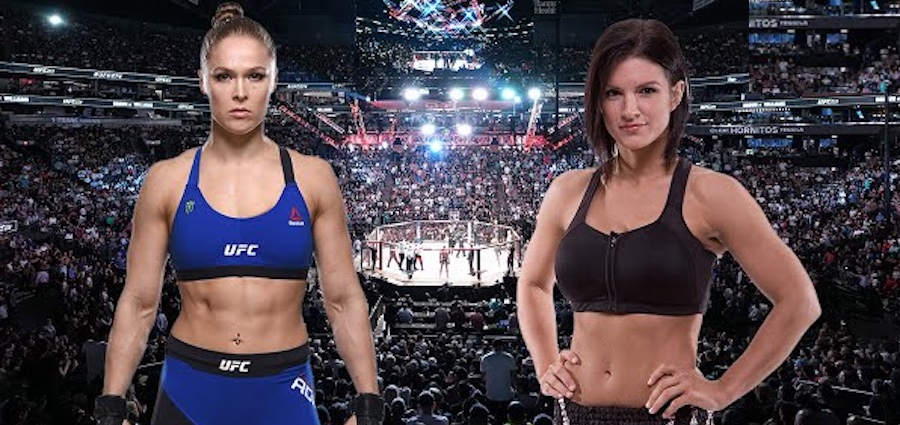
Ronda Rousey vs Gina Carano: A Cultural Experiment in MMA History
The murmurs have grown into a roaring anticipation: the potential clash between Ronda Rousey and Gina Carano, two titans of women's mixed martial arts (MMA), is far more than just another fight. It's an impending cultural phenomenon, a unique intersection of sporting legacy, personal identity, and the relentless evolution of a global sport. Slated for an electrifying return on Saturday, May 16, 2026, live on Netflix from the Intuit Dome in Inglewood, California, this Most Valuable Promotions (MVP) main event isn't merely a contest; it's a profound cultural experiment designed to explore how history grapples with the world it helped build.
For fans and pundits alike, the prospect of Rousey vs Carano conjures images of pioneers revisiting their creation. Both women didn't just compete; they were foundational figures who, at different stages, helped legitimize and popularize women's MMA. Their potential return isn't driven by simple nostalgia or the pursuit of fleeting attention, but rather a deeper urge to reconnect with the identities forged in the crucible of competition, and to measure their indelible legacies against a transformed landscape.
The Architects of Women's MMA: Carano's Credibility, Rousey's Revolution
To understand the magnitude of Rousey vs Carano, one must first appreciate the individual paths they blazed. Long before women's MMA became a staple of major promotions, Gina "Conviction" Carano emerged as its radiant and formidable face. With her striking beauty complementing a devastating Muay Thai arsenal, Carano captivated audiences in promotions like Strikeforce, bringing early visibility and crucial credibility to a sport that many, including some prominent promoters, initially dismissed. Her 7-1 record, highlighted by exciting, aggressive performances, proved that female fighters could draw crowds and deliver compelling action. She shattered misconceptions and laid vital groundwork, showcasing the athletic potential and entertainment value of women's combat sports.
Years later, Ronda "Rowdy" Rousey took that foundation and exploded women's MMA into the global mainstream. An Olympic bronze medalist in Judo, Rousey brought an unparalleled intensity and a dominant, armbar-centric style that saw her tear through opponents with terrifying efficiency. Her arrival in the UFC marked a paradigm shift. She became the promotion's first female champion, not just headlining pay-per-view events but outselling many of her male counterparts. Rousey proved unequivocally that female fighters could command global attention, drive significant revenue, and become household names. Her meteoric rise, media savvy, and crossover celebrity status transformed women's MMA from a niche attraction into a legitimate, marketable powerhouse. Together, Carano and Rousey didn't just compete; they were the essential catalysts who opened the doors for every female fighter who followed.
A Sport Transformed: The New Era They Helped Create
The sport these two pioneers would potentially return to, however, is profoundly different from the one they left. Women's MMA today is a deeper, faster, and far more sophisticated competitive ecosystem. Gone are the days when a handful of stars carried the weight of the entire division. Today's landscape boasts multiple weight classes teeming with world-class talent, honed by structured development systems, improved coaching, and a wealth of competitive opportunities that simply didn't exist during Carano's and even Rousey's primes.
Modern women's MMA fighters are often more well-rounded, having grown up benefiting from the very doors Rousey and Carano opened. They integrate diverse skill sets – striking, grappling, and wrestling – at a pace and technical level that has significantly elevated the sport. For Carano, whose last professional fight was in 2009, and Rousey, who stepped away in 2016, a return wouldn't be about reclaiming an old throne. Instead, it would be a true test of adaptability, measuring their legendary past against the formidable present. The speed, athleticism, and comprehensive skill sets of today's fighters pose a unique challenge, forcing these pioneers to confront the very evolution they helped ignite.
This dynamic forms the core of the "cultural experiment." It's not about dominance; it's about Rousey vs Carano: Pioneers Confronting Modern Women's MMA – a chance to witness how two legends adapt to, and perform within, the advanced competitive landscape they were instrumental in creating.
The "Cultural Experiment": Legacy, Narrative, and Netflix
The decision to host the Rousey vs Carano bout on a modern platform like Netflix, under the Most Valuable Promotions banner, is crucial to its framing as a cultural experiment. This isn't just a sporting event; it's a narrative waiting to unfold, blending high-stakes competition with compelling storytelling. The live stream on Netflix provides a global stage that transcends traditional sports broadcasting, allowing a massive audience to witness this collision between past influence and present reality.
The specifics of the fight itself add layers to the intrigue:
- Date & Time: Saturday, May 16, 2026, at 06:00 PM ET. This gives both fighters ample time to prepare, but also highlights their respective ages – Rousey will be 39 years old, and Carano will be 44.
- Venue: The state-of-the-art Intuit Dome in Inglewood, California, a fittingly grand stage for such a momentous event.
- Weight Class: A 145 lbs (featherweight) professional MMA bout. This is a key factor, as Rousey spent her career at 135 lbs, while Carano historically competed closer to 145 lbs. The agreed-upon weight class adds another tactical dimension, requiring Rousey to potentially fight at a higher weight than her prime, and for Carano to make a competitive return at her natural fighting weight after a long layoff.
- Promotion: Most Valuable Promotions (MVP), known for its strategic pairing of boxing and MMA stars, is adept at crafting compelling narratives around its events.
Fans won't just be watching who wins; they'll be observing how these iconic figures, after years away from the professional cage, navigate the physical and mental demands of a comeback in a sport that has rapidly evolved. Will their legendary techniques hold up? How will their conditioning compare to the younger generation they inspired? The anticipation lies in seeing how their historical impact translates into a contemporary performance. It's a testament to the enduring power of their legacies that such a matchup, years after their respective primes, can generate such immense excitement.
The Stakes Beyond the Scorecard: A Look at Comebacks and Legacies
For both Rousey and Carano, the stakes of this "cultural experiment" extend far beyond a win or a loss on their records. For Ronda Rousey, a fighter whose dominant aura was shattered by her two professional losses, a return against Carano offers a chance at a different kind of closure. It's not about reclaiming UFC gold, but about proving her enduring skill set and perhaps redefining her relationship with the sport that made her a global icon. A strong performance could solidify her legacy as a true pioneer, while a difficult outing might invite fresh scrutiny of her final career moments.
Gina Carano, on the other hand, last competed professionally in 2009. Her return would be an almost unprecedented test of will and physical readiness. For her, this fight is an opportunity to write a new chapter, to re-engage with the competitive fire that defined her early career, and to solidify her place in MMA history with a memorable performance after such a long hiatus. Regardless of the outcome, Carano’s willingness to step back into the cage after more than a decade away is a testament to her warrior spirit.
Practical Insight for Fans and Aspiring Fighters: This bout serves as a powerful reminder of the incredible dedication required at the elite level, especially for those attempting comebacks. It underscores the importance of a comprehensive training camp, careful weight management, and immense mental fortitude. For fans, it's a chance to appreciate the journey of these athletes, understanding that the outcome is just one part of a larger, more significant narrative about resilience, identity, and the relentless march of time in sports.
Ultimately, the Rousey vs Carano matchup transcends the boundaries of a typical sporting event. It is a profound cultural experiment, offering a unique lens through which to examine the evolution of women's MMA, the enduring power of individual legacies, and the timeless human desire to reconnect with one's truest identity. Whether embraced as pioneers revisiting their creation or questioned by a new audience, the intrigue lies in seeing how history fits into the world it helped build, making this one of the most anticipated and significant events in recent MMA memory.