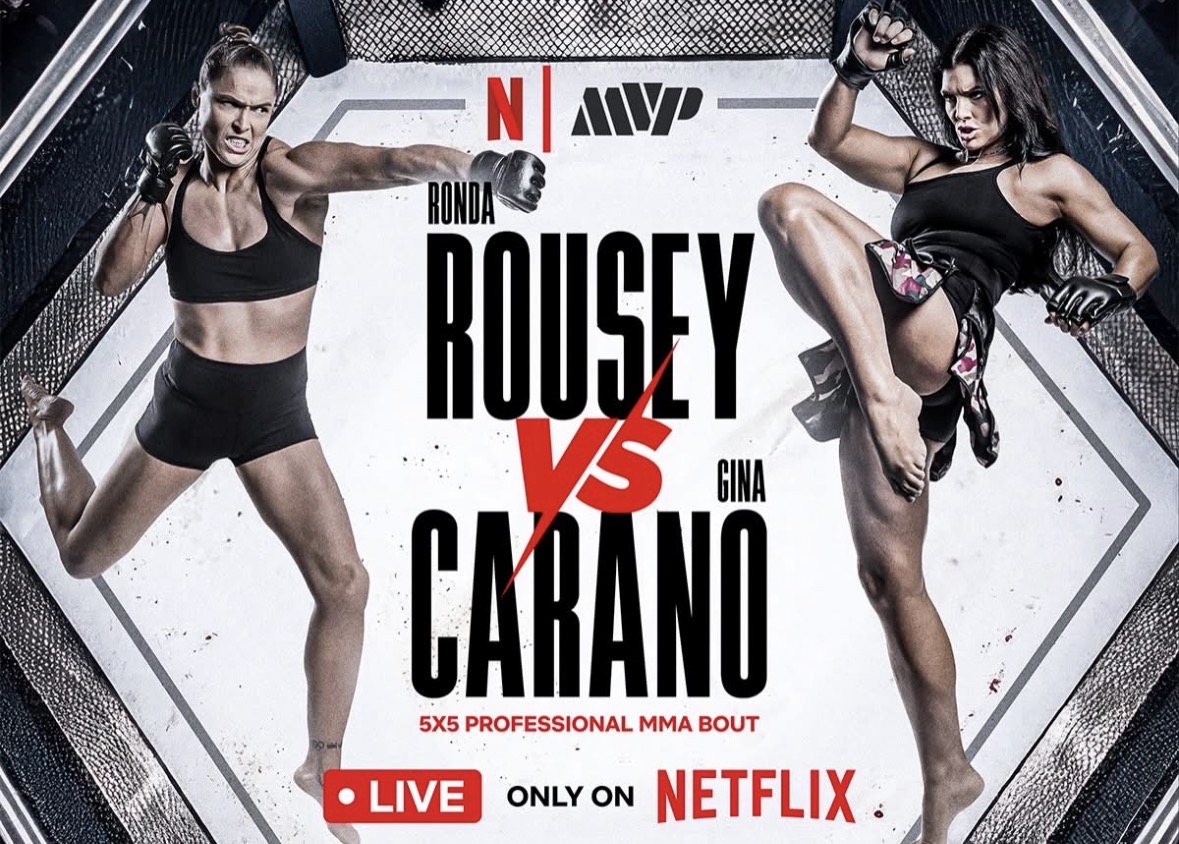
Rousey vs Carano: Pioneers Confronting Modern Women's MMA
The murmurs have become a roar, and the speculation has solidified into an undeniable reality: the monumental clash between two of women's mixed martial arts' most iconic figures, Ronda Rousey and Gina Carano, is officially on the horizon. This isn't just another fight; it's a collision of eras, a cultural experiment, and a deeply personal quest for two pioneers who didn't just compete, but fundamentally sculpted the sport as we know it. The prospect of Rousey vs Carano returning to the cage transcends mere nostalgia; it represents a unique opportunity to witness legacy measured against evolution.
The Trailblazers: How Rousey and Carano Forged Women's MMA
Before the UFC octagon routinely featured compelling female bouts, before young girls aspired to be MMA champions, there were trailblazers like Gina Carano and Ronda Rousey. These women didn't just break barriers; they built the very foundations upon which today's robust women's divisions stand.
Gina Carano, often dubbed "the face of women's MMA" in its nascent stages, played an instrumental role in giving the sport its early visibility and credibility. With her striking good looks and undeniable talent, Carano captivated audiences in promotions like EliteXC and Strikeforce, proving that female fighters could draw significant attention and deliver thrilling performances. Her contests against notable opponents like Cris Cyborg were not just fights; they were events that showcased the potential for women's combat sports, chipping away at the skepticism that often surrounded it. She demonstrated that women could be powerful, skilled, and incredibly marketable athletes, paving the way for future generations.
While Carano laid crucial groundwork, Ronda Rousey took women's MMA and exploded it into the mainstream. "Rowdy" Ronda was a phenomenon unlike any before her. An Olympic judo medalist, Rousey brought an unparalleled intensity and a devastating armbar that became her signature weapon. Her dominance in Strikeforce and eventually the UFC didn't just prove that female fighters could headline events and sell pay-per-views; it proved they could command global attention and transcend the sport itself. Rousey wasn't just a fighter; she was a cultural icon, appearing in movies, gracing magazine covers, and inspiring countless individuals. Her meteoric rise and the fervor she generated legitimized women's divisions in the eyes of even the most ardent skeptics, firmly embedding them into the fabric of major promotions.
The eras of Carano and Rousey, though distinct, were critical stepping stones. Carano showed that women could fight and be interesting; Rousey proved they could be superstars and champions worthy of the biggest stages. Their combined efforts essentially created the blueprint for what was once considered a niche attraction to become an integral, celebrated part of mixed martial arts.
A Changed Landscape: The Modern WMMA Ecosystem
The sport that Gina Carano and Ronda Rousey would step back into is vastly different from the one they left behind. When these pioneers were at their peak, women's MMA was still finding its footing, often relying on star power to drive interest. Today, the landscape has shifted dramatically from a "star-driven novelty" to a "fully matured competitive ecosystem."
The changes are profound and widespread:
- Deeper Talent Pools: Where a few dominant fighters once stood out, every weight class now boasts a multitude of highly skilled, well-rounded athletes. New generations of fighters have grown up with clear pathways to development, benefiting from the very doors Rousey and Carano opened.
- Structured Development Systems: Modern WMMA benefits from established gyms, sophisticated coaching methodologies, and robust amateur circuits. Fighters are entering the professional ranks with more polished skills and strategic depth than ever before.
- Technical Evolution: The game has moved forward. Striking techniques are more varied and potent, grappling exchanges are more intricate, and defensive skills are paramount. Fighters are expected to be proficient in all facets of MMA, not just one dominant discipline.
- Increased Pace and Athleticism: The intensity of modern fights is relentless. Athletes are fitter, faster, and more conditioned, maintaining high-output action for longer durations.
- Strategic Nuance: Game planning has become an art form. Coaches and fighters meticulously study opponents, developing specific strategies to exploit weaknesses and capitalize on strengths, a level of detail that wasn't as prevalent in earlier eras.
For Carano and Rousey, returning means confronting a sport that has not just grown, but fundamentally transformed. Their athleticism and fighting acumen from a decade or more ago would be tested against a new standard. Any return would not be about reclaiming dominance over a familiar landscape, but about measuring their legacy against this rapid evolution – a significant challenge that makes the Rousey vs Carano bout all the more intriguing.
The Fight Details: A Legacy Bout on a Modern Stage
The specifics of the Rousey vs Carano showdown paint a picture of a carefully curated event designed to honor history while embracing the future. Set for Saturday, May 16, 2026, at 06:00 PM ET, this highly anticipated bout will unfold at the state-of-the-art Intuit Dome in Inglewood, California. This choice of venue, a modern marvel, further underscores the blend of past and present.
Perhaps most significantly, the event will be broadcast exclusively on Netflix, a testament to the evolving media landscape and the power of compelling storytelling. The promotion behind this monumental clash is Most Valuable Promotions (MVP), a company known for its innovative approach to combat sports entertainment, particularly in blending celebrity appeal with legitimate competition. This strategic partnership ensures that the fight will reach a global audience, appealing to both longtime MMA fans and a new generation of viewers.
The fight itself is slated as a 145 lbs (featherweight) Main Event, contested over 5 rounds, 5 minutes each – a professional MMA bout. Let's delve into the tale of the tape:
- Ronda Rousey ("Rowdy"):
- Record: 12-2
- Status: Unranked
- Age at Fight: 39 years, 3 months, 2 weeks, 1 day
- Latest Weight (from active career): 135.0 lbs (61.2 kgs)
- Height: 5'6" (168cm)
- Reach: 66.0" (168cm)
- Gina Carano ("Conviction"):
- Record: 7-1
- Status: Unranked
- Age at Fight: 44 years, 1 month
- Latest Weight (from active career): 143.0 lbs (64.9 kgs)
- Height: 5'8" (173cm)
- Reach: 66.5" (169cm)
The statistics reveal fascinating dynamics. Carano, at 44, will be significantly older than Rousey at 39, and has been away from active competition for an even longer period. While Carano holds a slight advantage in height and reach, Rousey's professional record is more extensive and her championship pedigree undeniable. Both fighters will face the daunting task of shaking off considerable ring rust and adapting their bodies and minds to the rigors of high-level competition after years away. The featherweight division, a weight class Carano traditionally competed in and one Rousey briefly expressed interest in, makes sense for this matchup, likely minimizing strenuous weight cuts for both seasoned athletes.
More Than a Fight: Measuring Legacy Against Evolution
The ultimate intrigue of Rousey vs Carano lies beyond the punches and grappling exchanges. This bout is a profound cultural experiment, a living exhibit of how history intersects with the present. Fans aren't just looking for a knockout; they're yearning to see how these foundational figures, once considered untouchable, will fare against the very evolution they helped inspire. For more on this, check out our deep dive: Ronda Rousey vs Gina Carano: A Cultural Experiment in MMA History.
The narrative is rich with questions:
- Can they still compete at an elite level? After years away and with the sport's technical standards having advanced so much, can Rousey's judo-dominant style still be as effective? Can Carano's striking find its rhythm against a top-tier opponent?
- What does this mean for their legacies? For Rousey, who left the sport after consecutive losses, a dominant win could provide a sense of redemption. For Carano, a victory would be an incredible comeback story, validating her place in the sport's lore. A loss, however, might lead to questions about whether they should have stayed retired.
- How will the modern audience react? Will younger fans, who grew up watching a fully developed WMMA, appreciate the historical significance, or will they judge solely on current performance? Will older fans prioritize nostalgia or objective competitive analysis?
- Is it about reconnection? For athletes who forged their identity through competition, stepping away doesn't always feel like closure. This fight could be a deeply personal journey to reconnect with the core of who they are.
Regardless of the outcome, the Rousey vs Carano fight will be a talking point for years to come. It's a testament to their enduring impact and the power of human stories within the brutal beauty of combat sports. It's a moment for reflection on how far women's MMA has come and a unique opportunity to see two of its most important architects re-enter the arena they helped build.
Conclusion
The impending Rousey vs Carano bout is far more than a fight; it's a spectacle steeped in history, a measuring stick for an evolving sport, and a fascinating human drama. It embodies the courage of pioneers willing to confront their own past and the present reality of a world they helped create. As May 16, 2026, approaches, the world will watch with bated breath, not just to see who wins, but to witness a unique moment where legacy, evolution, and the indomitable spirit of two extraordinary women collide within the confines of the cage.